Products


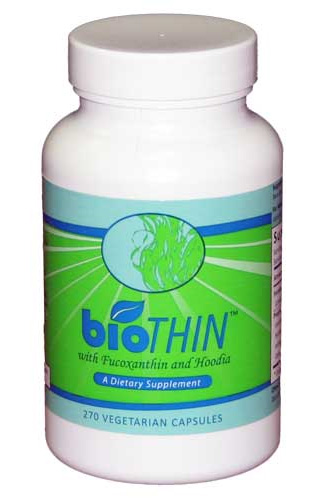
Biothin
Biothin List Price: $112.41
Your Price: $78.67
You Save: $33.74
(30.02%)
Order Now
Whey Protein
Whey Protein List Price: $120.91
Your Price: $97.00
You Save: $31.91
(24.75%)
Order Now
Probiotics
Probiotics List Price: $119.05
Your Price: $77.85
You Save: $42.00
(35.04%)
Order Now
Coconut Oil
Biothin List Price: $27.75
Your Price: $24.45
You Save: $3.00
(10.93%)
Order Now
Psyllium Fiber
Psyllium Fiber List Price: $79.00
Your Price: $64.97
You Save: $14.91
(18.67%)
Order Now
No-Grain Diet
No-Grain Diet List Price: $15.00
Your Price: $10.20
You Save: $4.80
(32%)
Order Now

Friday, May 14, 2010

Does Obesity Lead to Brain Damage?

Do you need another compelling reason to stay in shape? A new study warns that obesity can cause you to have less brain tissue, which increases your risk of neurodegenerative diseases like dementia and Alzheimer’s as you grow older.

It was discovered in 2007 that almost half of Americans of European descent carried a variant of the fat mass and obesity associated (FTO) gene, which is the reason why they tend to put on a few extra pounds of weight, increase the size of their waistline by about an inch, and also increase their risk of obesity compared to those who don’t carry the gene.

UCLA researchers recently found that the same FTO variant, which is also carried by around 25 percent of U.S. Hispanics and by 15 percent of African Americans and Asian Americans, is associated with the loss of brain tissue. This puts around one third of the U.S. population at higher risk of diseases like Alzheimer's.

Using MRI (magnetic resonance imaging), the researchers made 3D maps of the brains of 206 healthy elderly people from 58 areas around the country. They found that those who had the gene had decreased brain tissue – 8 percent less in the frontal lobe tissue (the brain's command and control center) and 12 pe cent less in occipital lobe tissue (the part of the brain which controls eyesight and perception).

The findings show that not only that does the prevalent FTO gene make your waistline bulge, it also makes your brain look 16 years older.

Two-thirds of adult Americans are either obese or overweight. The USDA blames fats, but Dr. Joseph Mercola says fructose, primarily in the form of high fructose corn syrup, and carbohydrates and grains are causing the epidemic.

We all need to consume a certain amount of carbohydrates, but since your body’s ability to store carbs is limited, eating more carbohydrates than what you need turns them into fat and stores them as fat, increasing your risk of bloating, depression, fatigue, frequent sleepiness, obesity, and almost all chronic degenerative diseases, Dr. Mercola explains.

Dr. Mercola’s No-Grain Diet is designed to help you conquer carbohydrate addiction, achieve weight loss, and stay slim for life. Reducing sugars and grains will not only help you lose weight, it will also help drastically improve your overall health.

Friday, April 2, 2010

Seaweed: Weight Loss Wonder or Fat Burning Fad?

Scientists from Newcastle University in the UK have discovered that alginate, a dietary fiber found in sea kelp, one of the world’s largest commercially-used seaweed, could aid in weight loss by helping reduce the body’s fat absorption rate by as much as 75 percent.

The researchers used an artificial gut to test the effectiveness of more than 60 different natural fibers and found that alginate stops the body from absorbing fat better than most over-the-counter anti-obesity treatments.

The Newcastle team is now adding the seaweed fiber to bread to see if they can develop foods that can help you achieve weight loss lose while you eat them. Clinical trials would soon be conducted to find out if such foods would be effective weight loss tools when eaten as part of a normal diet.

Low levels of alginates are already being used to thicken and stabilize many foods. The researchers say that alginate bread is actually better than your ordinary white loaf when it comes to texture and richness. They believe that alginates not only have a great potential for weight loss but in boosting overall fiber content as well.

Dr. Joseph Mercola, proponent of the no-grain diet, explains that eating foods rich in fiber helps keep you feeling full longer and traps cholesterol and fats, thus helping you achieve weight loss and reduce your risk of obesity.

Aside from helping you achieve weight loss, adding fiber to your diet will help enhance your intestinal health by absorbing water and adding bulk to your stool and encouraging the growth of probiotics (which also helps boost your immune system); reduce the risk of cardiovascular disease, certain cancers and diabetes; and, slow down your absorption of sugar to improve your blood glucose.

But Dr. Mercola disagrees with the idea of enriching bread with the seaweed fiber, even if it does help greatly reduce your body’s fat absorption rate. One of the lessons he learned in his 20-year experience treating patients is that grains, even whole-grain, organic wheat, are best avoided by the vast majority of the population.

More than 85 percent of Americans have problems controlling their insulin levels, especially those who are overweight and are suffering from diabetes, high cholesterol and hypertension.

One of the most important changes you can make to your diet is to limit or if necessary, completely eliminate grains. The no-grain diet will certainly help you accomplish this, as well as boost your weight loss efforts.

A high-fiber diet can provide you with many health benefits, but you shouldn’t get the fiber from enriched bread or grains because your body is designed to consume fiber from fruits and vegetables. Increased vegetable intake is another feature of the no-grain diet.
 

*These statements have not been evaluated by the Food and Drug Administration. This product is not intended to diagnose, treat, cure or prevent any disease. If you are pregnant, nursing, taking medication, or have a medical condition, consult your physician before using this product.
NoGrainDiets.com